Need
Give adolescents a safe space to explore the effects of their decisions without harming their social standing or emotional well-being.
How might a game make the invisible consequences of emotional choices visible and safe to explore?
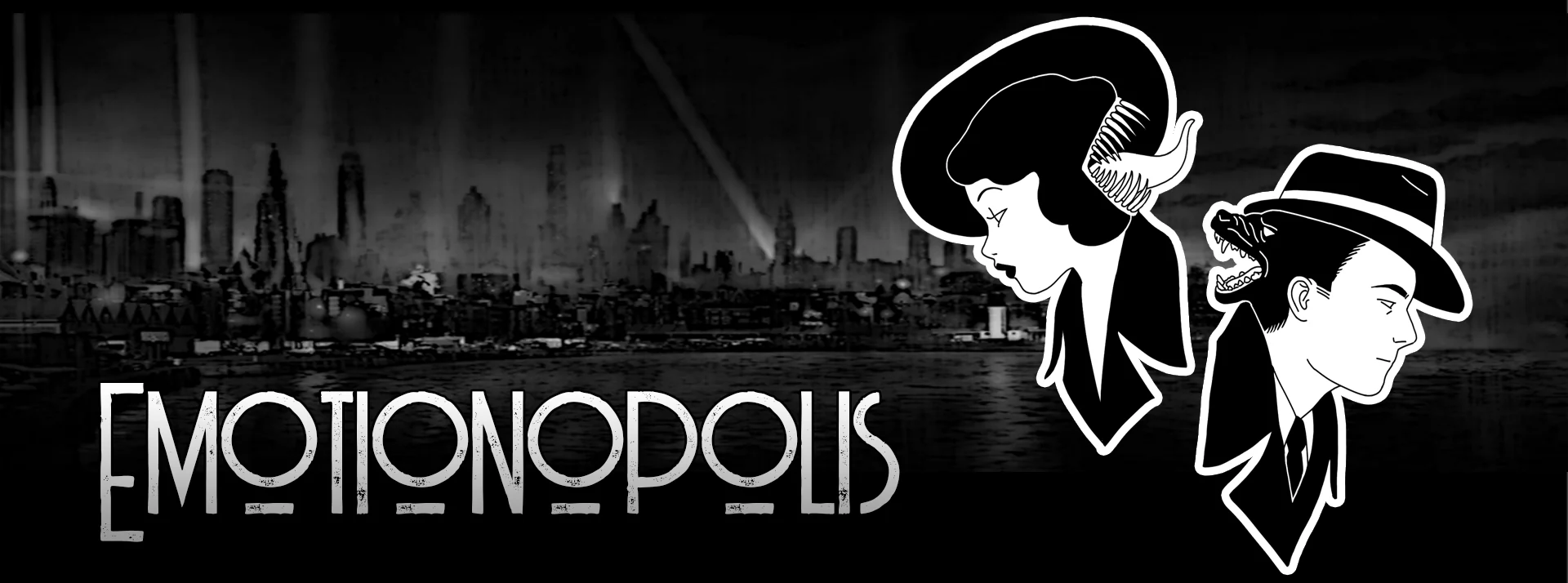
Emotionopolis is a mystery-themed narrative game set in a fictional world where everyone has two faces: the front expresses pleasant emotions and the back, unpleasant. Players assume the role of a detective investigating disruptions in the balance between these faces. Every choice has a direct and visible impact on the emotional states of both citizens and the player character, creating a safe space to practice emotional intelligence, self-regulation, and empathy.
 Graduate StudentNew York University2017EDCT-GE 2505: Designing Simulations/Games for Learning
Give adolescents a safe space to explore the effects of their decisions without harming their social standing or emotional well-being.
An open-world mystery with branching choices, visible emotional-balance meters, and context-sensitive interactions that affect both other characters and the player.
A complete learning-game design and interactive prototype establishing the world, narrative arc, player journey, core mechanics, feedback system, and evaluation plan.
The concept demonstrates how emotional regulation can become a visible system in which learners experiment, receive immediate feedback, and adapt their choices; learner impact was not formally measured.
Emotionopolis taught me to connect story, interface, and mechanics to the same learning model. The noir mystery was not simply decoration: gathering evidence supported guided discovery, branching dialogue created contextual decisions, and the balance meters made the consequences of those decisions legible. It also reinforced the value of pairing complementary strengths; Yael led much of the mechanics and scenario design while I developed the visual language and prototype, with both of us shaping and reviewing the whole experience.
Methods & Tools: Learning-game design · Branching narrative · Guided discovery · Emotional-balance systems · Interface design · Interactive prototyping